
1 min read
Oilfield Rental Tools and Services: What Superior Performance Offers
Superior Performance Inc. provides oilfield rental tools, field service support, tubular management services, laser tally, casing ID caliper...
4 min read
|
Elevator bails are forged high-grade steel links that connect a drilling elevator to the rig's top drive, letting crews safely raise and lower pipe in and out of the hole. Drilling operations use shorter rig bails, while completion work calls for long bails. Always inspect bails before each run, confirm positive latches, and verify the bail length matches the job. |
If you work in oil and gas, you already know that protecting people and equipment is the foundation of a safe operation. That includes how you remove, transport, store, and handle every piece of tubular running through the rig floor.
Elevator bails sit right at the center of that work. Without them, lifting and lowering pipe would be slower, less safe, and a lot harder on equipment.
In the oil and gas industry, elevator bails are essential handling tools for drilling and completion operations.

Elevator bails are forged high-grade steel links that connect a drilling elevator to the rig's top drive (also called the hook). Each pair of bails latches around the top of a pipe joint, so the driller can raise and lower pipe in and out of the wellbore safely.
Bails are typically straight rods with forged eyes at each end. One eye connects to the top drive, the other to the elevator that grips the pipe. The two-link setup keeps the load balanced and centered over the well.
You'll hear them called a few different things on the rig floor - elevator links, lifting bails, or just "bails." They all refer to the same component.
The length of the bail determines what kind of work it's built for. Choosing the wrong length wastes time and creates safety risk.
|
Bail Type |
Typical Use |
Common Lengths |
|---|---|---|
|
Rig bails |
Drilling operations |
Shorter, fixed lengths sized to the rig |
|
Long bails |
Completion and workover operations |
Longer, often used with elevators handling stands |
Drilling crews use rig bails. Completion crews use long bails because they need extra clearance to handle longer tools, stands, and completion assemblies above the rotary table.
Bails do more than just lift pipe. The right set keeps the whole pipe-handling process moving safely and efficiently.
During drilling, the bails hang from the top drive and connect down to the elevator. When the driller needs to add or remove a joint, the crew positions the elevator around the pipe, latches it, and the top drive lifts. Once the joint is set or removed, the elevator unlatches, and the bails come back to the floor for the next stand.
The whole sequence relies on the bails staying straight, balanced, and free of damage. A bent or worn bail can throw off the load, jam the elevator, or - in the worst case - fail under load.
While bails make rig work faster, safety has to come first. Here's what to check every time:
For more on pipe handling safety, see our post on the importance of OCTG and drill pipe inspections.
Bails rarely work alone. They're part of a larger pipe-handling system that includes:
Let us help you with service and getting you the right tools for the job.
At Superior Performance, we deliver top tools with quality, service, hard work, and integrity. We go above and beyond to provide the highest level of service, and we are committed to helping you find the right tool.
Contact us to get more information about our tool rental offerings!
Why Your Elevator Needs Beckets and Bails - https://www.keystoneenergytools.com/why-your-elevator-needs-beckets-and-bails/
The Role of Lifting Bails in the Oilfield - https://msipipeprotection.com/role-lifting-bails-oilfield/
1 min read
Superior Performance Inc. provides oilfield rental tools, field service support, tubular management services, laser tally, casing ID caliper...
1 min read
API standards are critical for ensuring the quality and safety of drill pipe inspections. By following API standards, drilling contractors can be...
1 min read
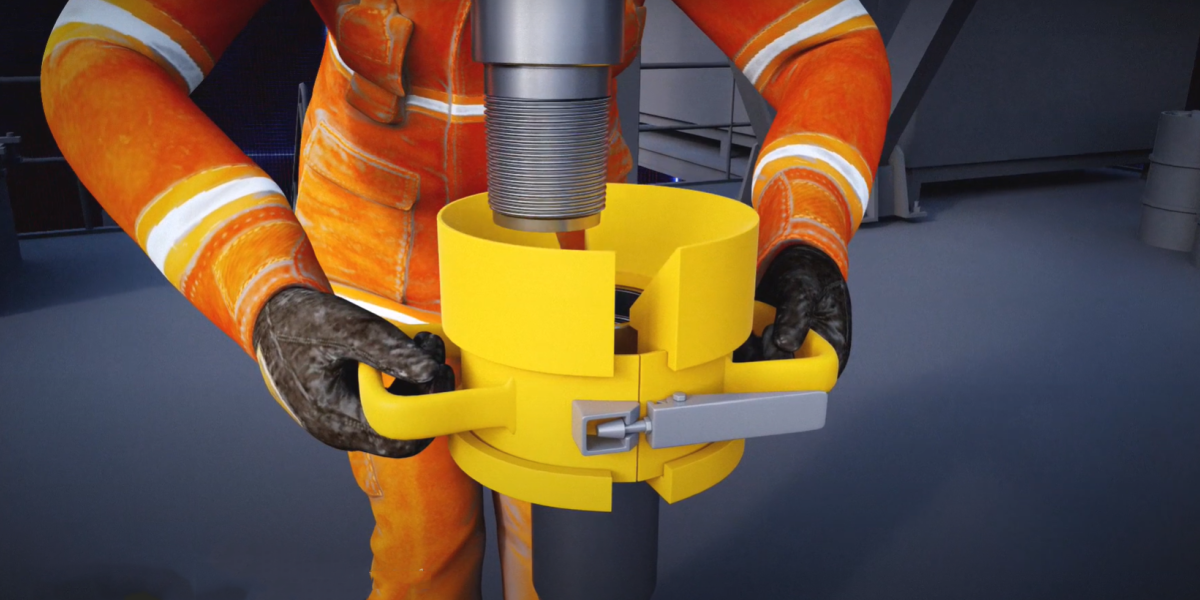
Using the right stabbing guide is the only way to fully prevent pipe and thread damage and minimize potential connection failure. A good stabbing...